🌿 Back to Nature: Understanding the Vegetative Style in Floral Design
There’s something really special about working with flowers in their most natural form — no fuss, no forcing, just letting them do what they do best.
That’s exactly what the vegetative style in floral design is all about. It’s a way of arranging flowers that takes its inspiration directly from nature, recreating how plants grow and live together in the wild.
It’s less about perfection, and more about observation — and I have to say, it’s one of the most calming and rewarding styles to work in.
🌿 What Is the Vegetative Style?
At its heart, vegetative design is about respecting how plants naturally grow — their seasons, their shapes, and their surroundings.
That means:
Only using materials that would naturally grow together
Designing with the correct growth patterns and heights
Avoiding anything artificial or overly styled
So, for example, you wouldn’t find tulips and chrysanthemums growing side by side in nature — they belong to completely different seasons — so in vegetative design, we wouldn’t arrange them together either.
Spring is a particularly lovely time to explore this style, as there’s such an abundance of materials that do naturally grow alongside one another.
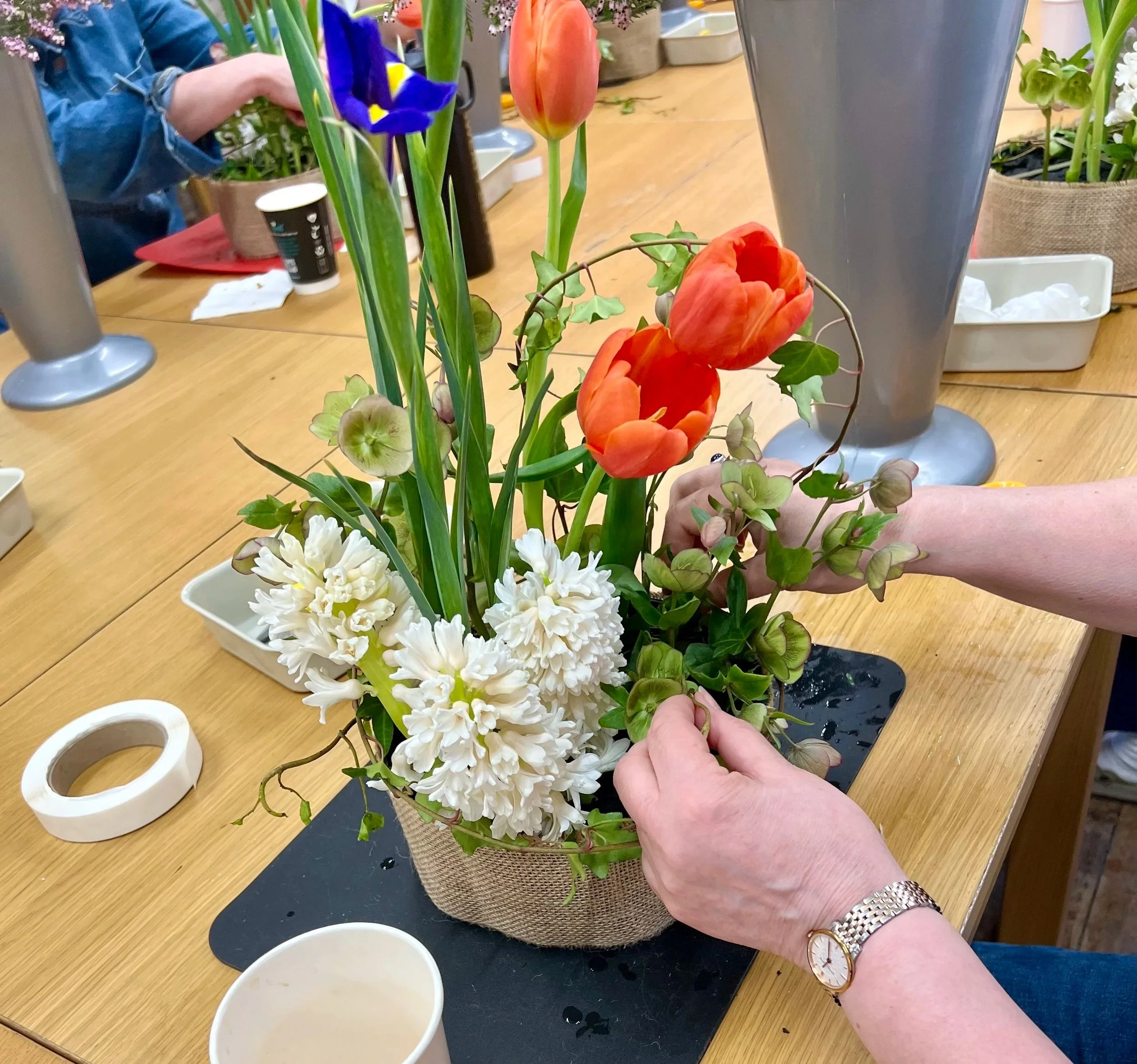
A soft, natural spring arrangement featuring iris, tulips and hyacinth — styled to look like a garden scene
🌿 Designing as Nature Intended
One of the key principles is arranging each flower as it would grow in its natural environment.
Iris grow tall and elegant — so they should stand proudly above the rest.
Tulips are also upright but slightly shorter, and tend to grow in clusters. They also have a tendency to wander towards the light!
Hyacinths are much lower, with shorter stems, and should sit closer to the base in their own little groups.
Nothing in nature grows in perfect uniformity, so it’s important to vary heights slightly — those subtle differences are what make the design feel real and alive.
And direction matters too — if a flower naturally grows upwards, we keep that upward movement. No forcing stems to angle outwards just to “fill space.”
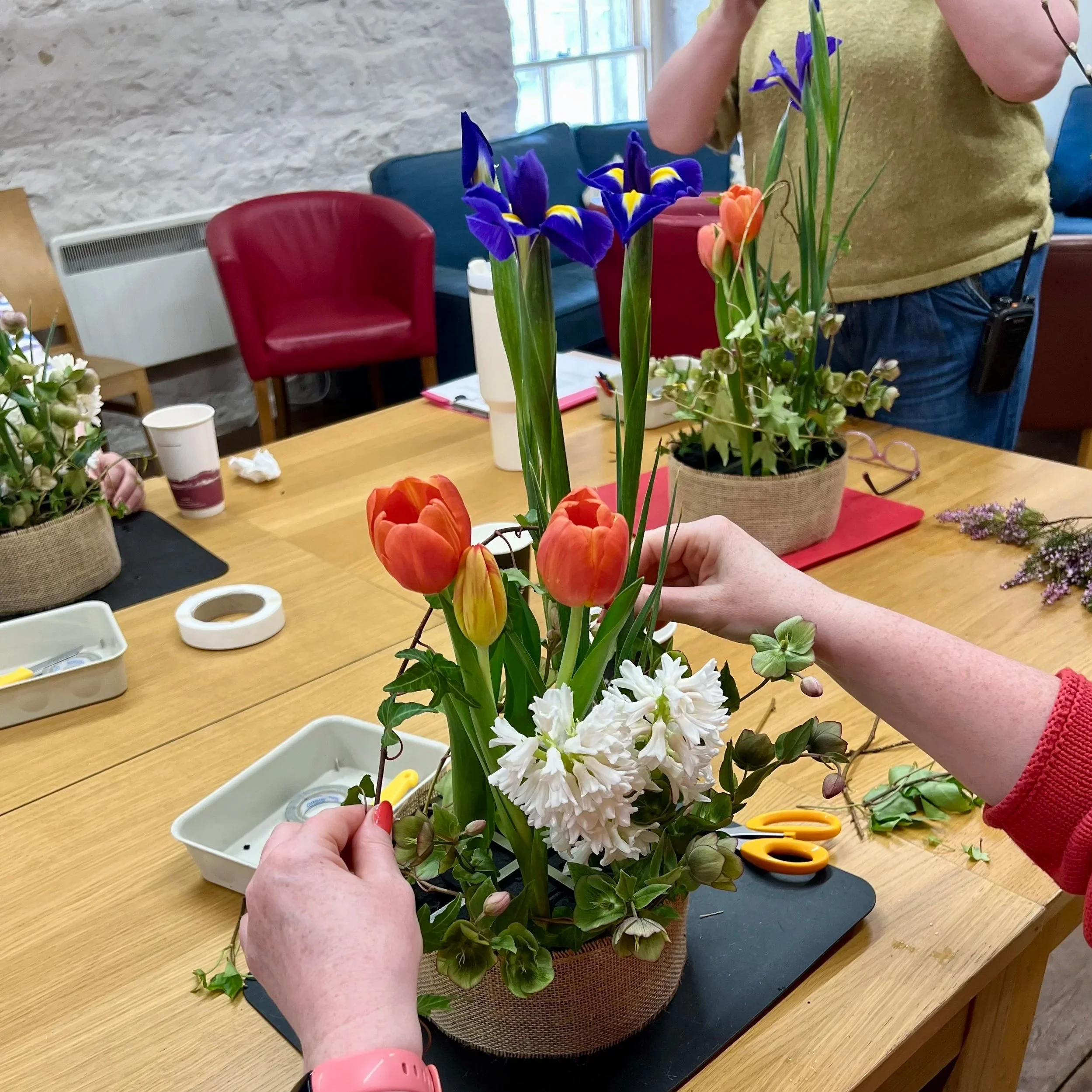
Check out the different heights…
🌿 Working with Natural Companions
Foliage can play a supporting role in Vegetative design, but it has to make sense.
In spring, that might include:
Moss
Ivy
Natural ground cover
But you wouldn’t reach for eucalyptus or palm leaves - beautiful as they are - because they simply wouldn’t belong in that setting. They come from different seasons and different locations and would not naturally grow together.
Different materials also behave differently:
Ivy trails and loops, often covering the ground — so let it do just that.
Ginesta or Heather is a little more relaxed and airy, so it can “bush out” slightly, adding softness and movement.
The key is to let each material behave as it naturally would, rather than trying to control it.
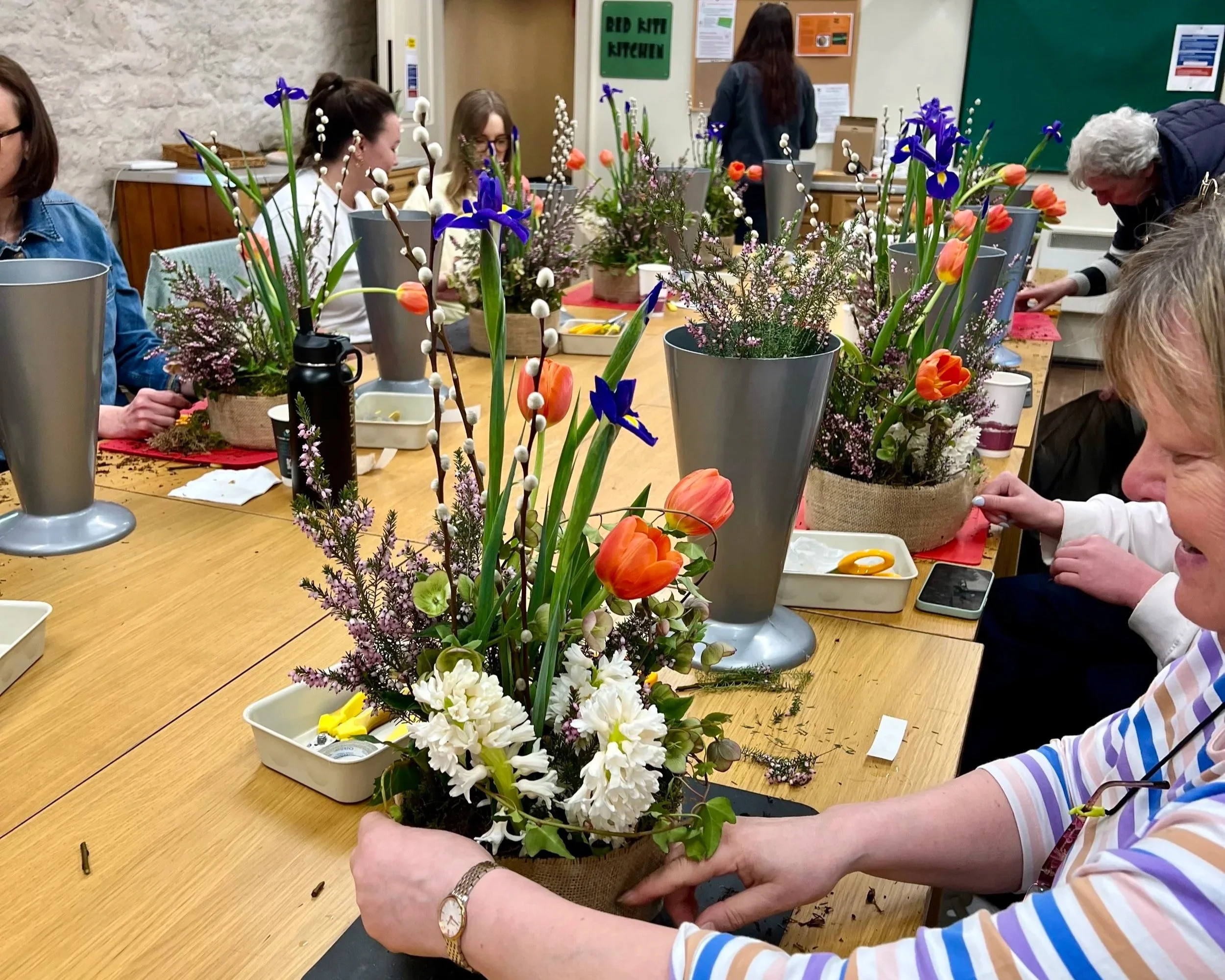
Filling out with Trailing Ivy and Heather
🌿 Grouping & Growth Habits
Another important aspect of vegetative design is grouping.
Plants that grow together in nature should be arranged together in your design.
Hyacinths in their own cluster
Tulips grouped separately
Iris forming their own taller section
This creates a design that feels balanced, but also true to life — like a little snapshot of a garden.
Watch them Tulips go!
🌿 Keeping It Natural (Even the Mechanics)
Vegetative design keeps things honest — no hidden tricks or manipulation of the materials.
That means:
No wiring, pinning, or curling stems
No artificial shaping
No decorative extras
Even the mechanics should feel natural. You can cover floral foam (preferably plant based ‘Renewal’ foam) with:
Moss
Bark
Stones
These aren’t there to decorate, but to blend the design into its environment, just as it would appear outdoors.
🌍 Why This Style Matters
Beyond being beautiful, vegetative design gently reconnects us with the natural world.
It encourages us to slow down, observe, and work with nature rather than against it. It’s also a more sustainable approach to floristry — using seasonal materials and letting them shine without overworking them.
And honestly, there’s something quite magical about creating an arrangement that looks like it’s simply grown that way.
🌿 If you’d love to explore natural, seasonal floristry like this for yourself, keep an eye on my upcoming workshops with The Northern Flower Garden — it’s a lovely way to slow down and get hands-on with the seasons.
Debbie x
The Northern Flower Garden
